This article covers a practical implemantation of a dynamic sequential list (dynamic array) in C++, focusing on core data structure operations with complete, runnable code and detailed explanations.
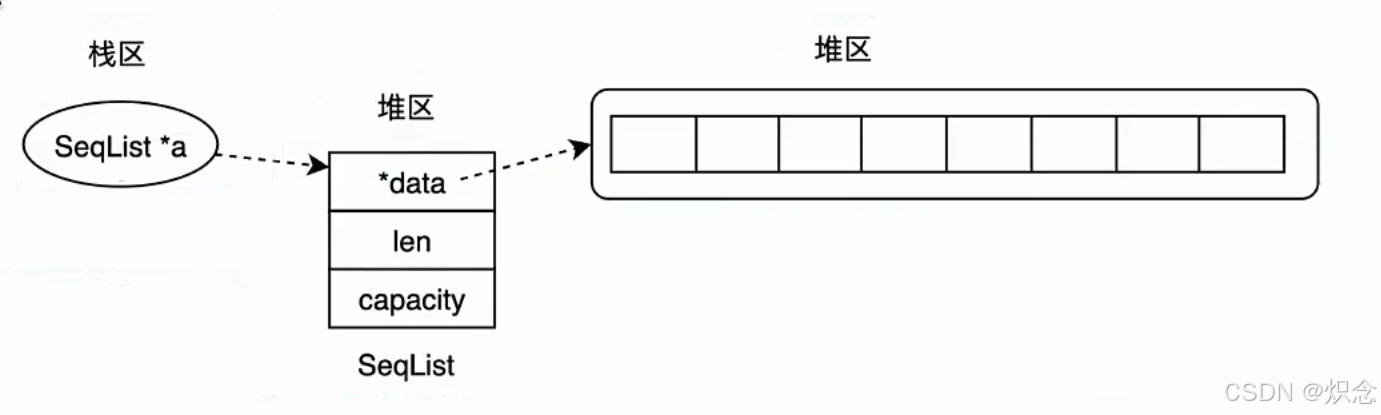
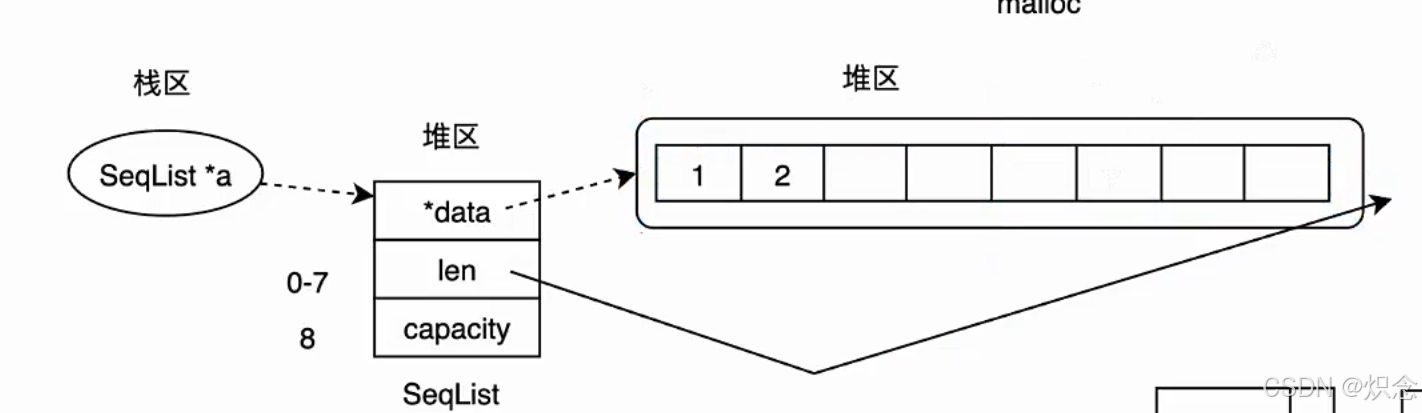
1. Sequential List Structure Definition
// Header structure for the sequential list
typedef struct {
    Element* array;            // Pointer to the dynamic data storage
    int count;                 // Current number of stored elements
    int capacity;              // Maximum capacity before resizing is needed
} SeqList;

// 'count' always indicates the next available insertion position
2. Function Declarations
2.1. Creation and Deletion
SeqList* initSeqList(int n);                   // Allocate and initialize a new list
void destroySeqList(SeqList* list);            // Free the list header and its data
2.2. Resizing Function
int expandCapacity(SeqList* list); // Double the current capacity
2.3. Insertion Operations
int appendElement(SeqList* list, Element value);        // Insert at the end
int prependElement(SeqList* list, Element value);       // Insert at the beginning
int insertElement(SeqList* list, int position, Element value);  // Insert at a specific index
2.4. Display and Search
void displayList(const SeqList* list);                 // Traverse and print all elements
int findElement(const SeqList* list, Element value);   // Search by value, returns index or -1
2.5. Deletion Operations
int removeByValue(SeqList* list, Element value);       // Delete first occurrence of a value
int removeFirst(SeqList* list);                        // Delete the first element
int removeLast(SeqList* list);                         // Delete the last element
3. Function Implementations
3.1. initSeqList - Initialize a Sequential List
Declaration:
SeqList* initSeqList(int n);
Purpose: Allocates a list with a specified capacity and returns a pointer to it.
Implementation Logic:
- Allocate memory for the list header.
- Allocate memory for the element storage array.
- Initialize
countto 0 and setcapacityton. - If any allocation fails, return
NULL.
Code:
SeqList* initSeqList(int n) {
    SeqList* list = (SeqList*)malloc(sizeof(SeqList));
    if (list == NULL) {
        printf("Failed to allocate list header\n");
        return NULL;
    }

    list->array = (Element*)malloc(sizeof(Element) * n);
    if (list->array == NULL) {
        printf("Failed to allocate data array\n");
        free(list);
        return NULL;
    }

    list->count = 0;
    list->capacity = n;
    return list;
}
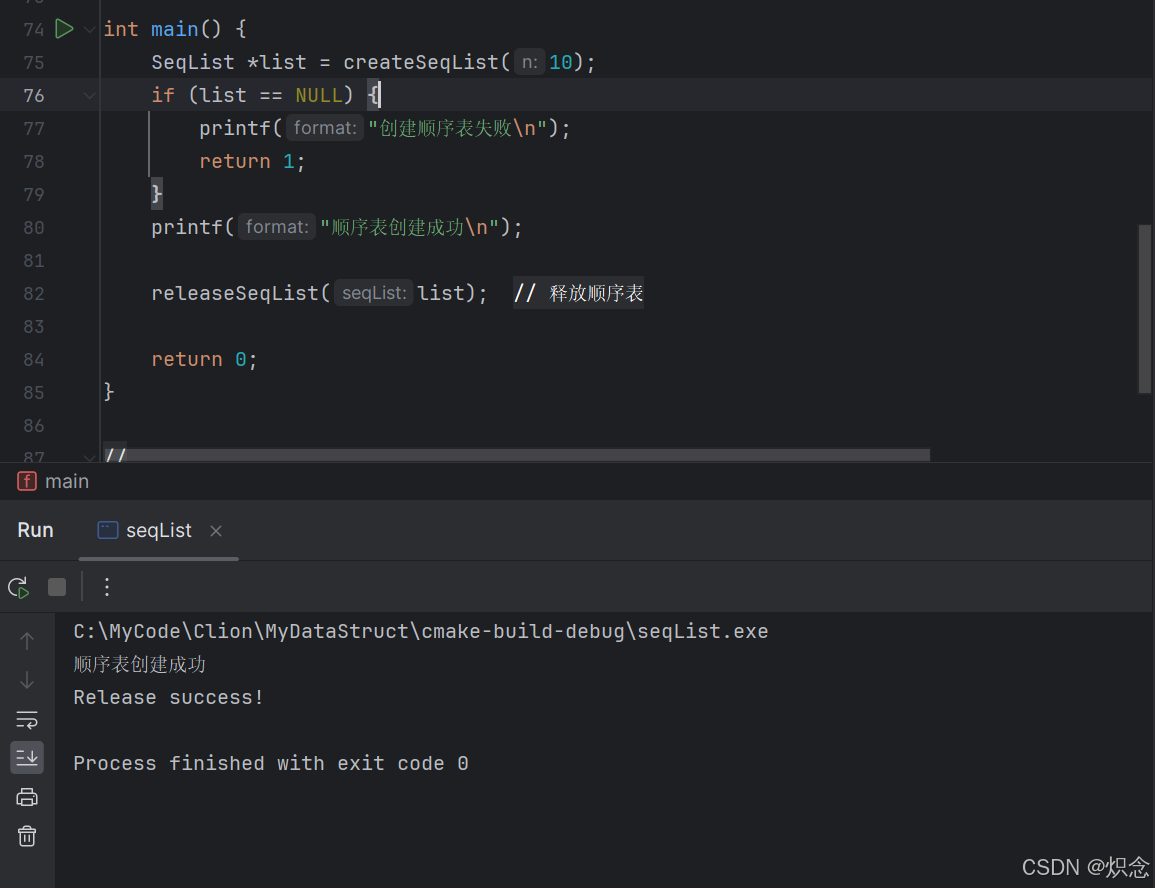
Test Example:
int main() {
    SeqList* myList = initSeqList(10);
    if (myList == NULL) {
        printf("List creation failed\n");
        return 1;
    }
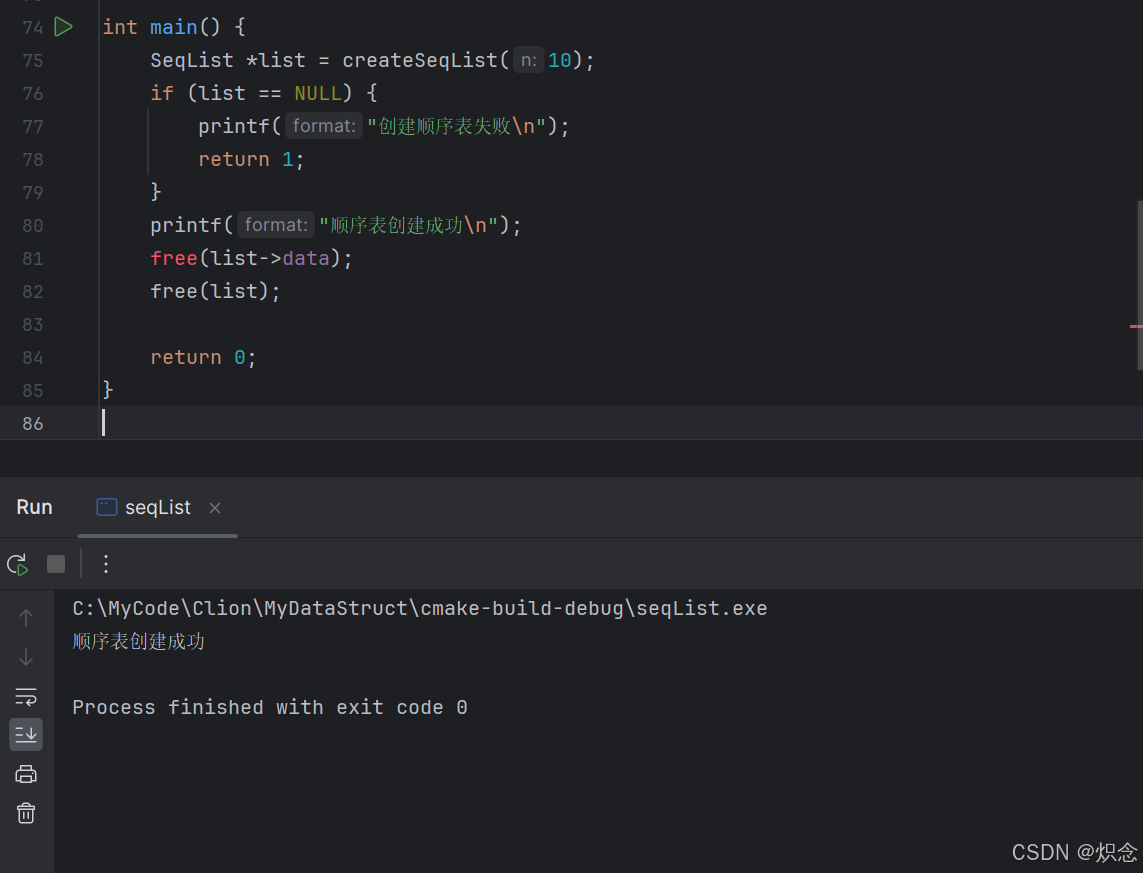
    printf("List created successfully\n");
    destroySeqList(myList);
    return 0;
}
Test Result:
3.2. destroySeqList - Release Resources
Declaration:
void destroySeqList(SeqList* list);
Purpose: Safely frees all memory associated with the list to prevent leaks.
Implementation Logic:
- Check if the list pointer is valid.
- If the data array exists, free it.
- Free the list header itself.
Code:
void destroySeqList(SeqList* list) {
    if (list) {
        if (list->array) {
            free(list->array);
            list->array = NULL;
        }
        free(list);
        printf("List destroyed\n");
    }
}
Test Example:
int main() {
    SeqList* myList = initSeqList(10);
    if (myList == NULL) {
        printf("List creation failed\n");
        return 1;
    }
    printf("List created successfully\n");
    destroySeqList(myList);
    return 0;
}
Test Result:
3.3. expandCapacity - Dynamic Resizing
Declaration:
int expandCapacity(SeqList* list);
Purpose: Doubles the storage capacity of the list when it becomes full.
Implementation Logic:
- Allocate a new memory block twice the current capacity.
- Copy all existing elements from the old memory to the new block.
- Release the old memory.
- Update the data pointer to the new block.
- Update the
capacityvalue.
Code:
int expandCapacity(SeqList* list) {
    Element* newBlock = (Element*)malloc(sizeof(Element) * 2 * list->capacity);
    if (!newBlock) {
        printf("Resizing failed: allocation error\n");
        return -1;
    }

    for (int i = 0; i < list->count; i++) {
        newBlock[i] = list->array[i];
    }

    free(list->array);          // Release old memory
    list->array = newBlock;     // Assign new memory
    list->capacity *= 2;
    printf("Capacity expanded\n");
    return 0;
}
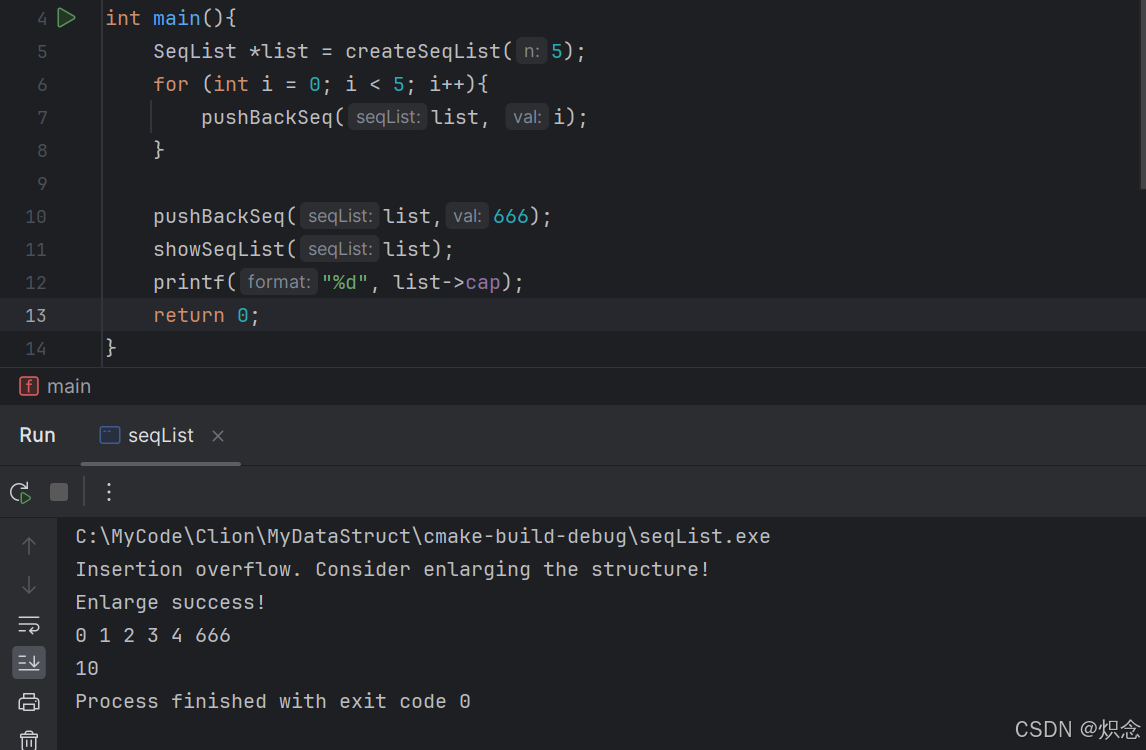
Test Example:
int main() {
    SeqList* myList = initSeqList(3);
    for (int i = 0; i < 3; i++) {
        appendElement(myList, i);
    }
    appendElement(myList, 42);  // Triggers resize
    displayList(myList);
    printf("Capacity: %d\n", myList->capacity);
    destroySeqList(myList);
    return 0;
}
Test Result:
3.4. displayList and findElement
Declarations:
void displayList(const SeqList* list);
int findElement(const SeqList* list, Element value);
Purpose:
displayList: Prints all elements in the list.findElement: Searches for a value and returns its index, or -1 if not found.
Implementation Logic:
- displayList: Validate the list and data pointer, then iterate through
countelements. - findElement: Validate the list, then loop through elements. If a match is found, return the index immediately. Otherwise, return -1.
Code:
void displayList(const SeqList* list) {
    if (list == NULL || list->array == NULL) {
        printf("List is empty or invalid\n");
        return;
    }
    for (int i = 0; i < list->count; i++) {
        printf("%d ", list->array[i]);
    }
    printf("\n");
}

int findElement(const SeqList* list, Element value) {
    if (!list || !list->array || list->count <= 0) {
        printf("List is empty or invalid\n");
        return -1;
    }
    for (int i = 0; i < list->count; i++) {
        if (list->array[i] == value) {
            return i;
        }
    }
    printf("Value not found\n");
    return -1;
}
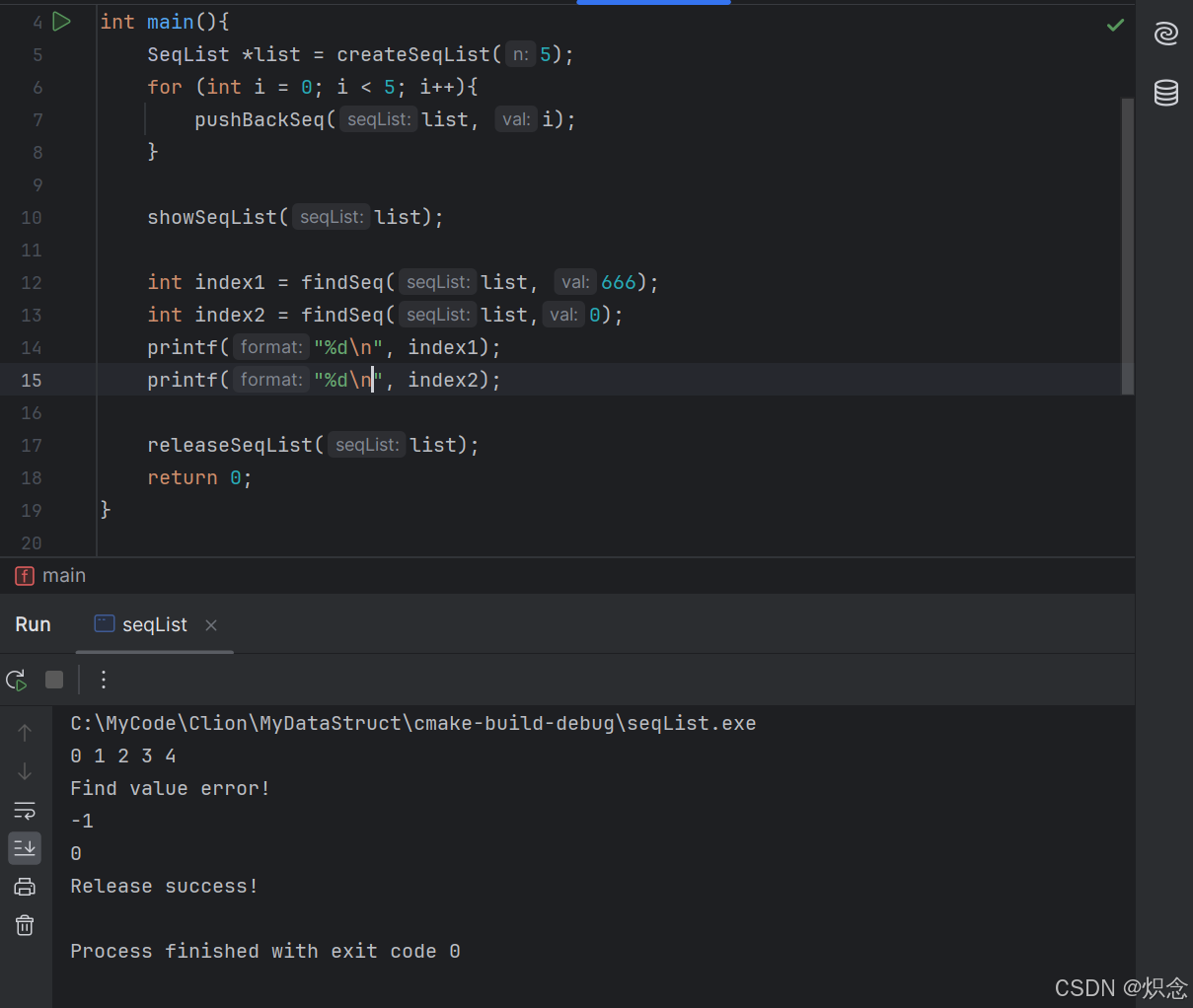
Test Example:
int main() {
    SeqList* myList = initSeqList(5);
    for (int i = 0; i < 5; i++) {
        appendElement(myList, i);
    }
    displayList(myList);

    int index1 = findElement(myList, 99);
    int index2 = findElement(myList, 2);
    printf("Index of 99: %d\n", index1);
    printf("Index of 2: %d\n", index2);

    destroySeqList(myList);
    return 0;
}
Test Result:
3.5. appendElement, prependElement, and insertElement - Insertions
Declarations:
int appendElement(SeqList* list, Element value);
int prependElement(SeqList* list, Element value);
int insertElement(SeqList* list, int position, Element value);
Purpose:
appendElement: Inserts an element at the end.prependElement: Inserts an element at the beginning.insertElement: Inserts an element at a given index.
Implementation Logic:
- Comon Checks: Validate pointers and trigger resizing if
count >= capacity. - appendElement: Place the value at index
count, then incrementcount. - prependElement: Shift all elements one position to the right starting from the end, place the value at index 0, and increment
count. - insertElement: Validate the posision (0 to
count). Shift elements frompositiontocount-1one step right, insert the value, and incrementcount.
Code:
int appendElement(SeqList* list, Element value) {
    if (!list || !list->array) {
        printf("List is null\n");
        return -1;
    }
    if (list->count >= list->capacity) {
        if (expandCapacity(list) == -1) return -1;
    }
    list->array[list->count] = value;
    list->count++;
    return 0;
}

int prependElement(SeqList* list, Element value) {
    if (!list || !list->array) {
        printf("List is null\n");
        return -1;
    }
    if (list->count >= list->capacity) {
        if (expandCapacity(list) == -1) return -1;
    }
    for (int i = list->count; i > 0; i--) {
        list->array[i] = list->array[i - 1];
    }
    list->array[0] = value;
    list->count++;
    return 0;
}

int insertElement(SeqList* list, int position, Element value) {
    if (!list || !list->array) {
        printf("List is null\n");
        return -1;
    }
    if (position < 0 || position > list->count) {
        printf("Invalid insertion position\n");
        return -1;
    }
    if (list->count >= list->capacity) {
        if (expandCapacity(list) == -1) return -1;
    }
    for (int i = list->count - 1; i >= position; i--) {
        list->array[i + 1] = list->array[i];
    }
    list->array[position] = value;
    list->count++;
    return 0;
}
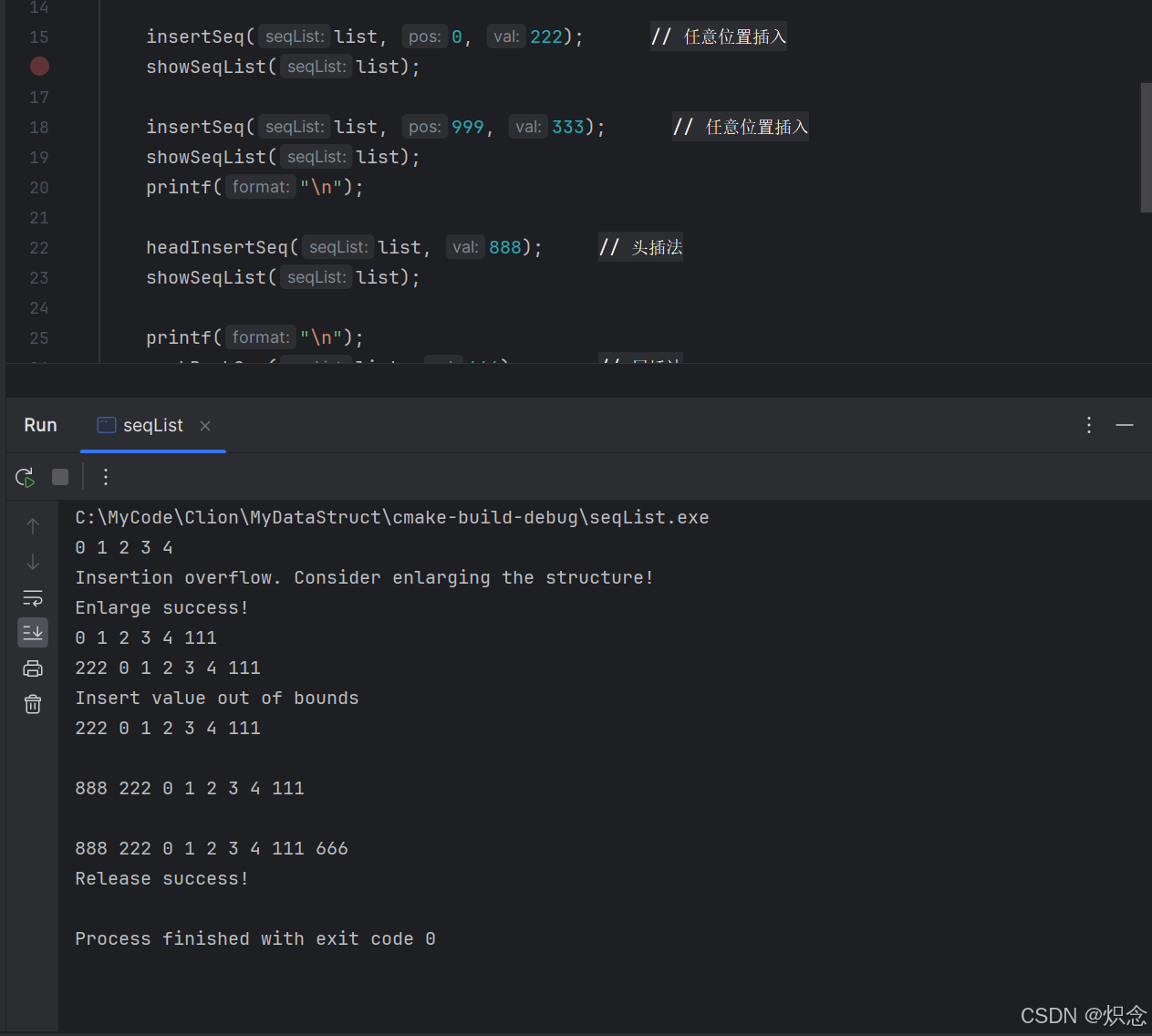
Test Example:
int main() {
    SeqList* myList = initSeqList(5);
    for (int i = 0; i < 5; i++) {
        appendElement(myList, i);
    }
    displayList(myList);

    insertElement(myList, 5, 100);
    displayList(myList);

    insertElement(myList, 0, 200);
    displayList(myList);

    prependElement(myList, 300);
    displayList(myList);

    appendElement(myList, 400);
    displayList(myList);

    destroySeqList(myList);
    return 0;
}
Test Result:
3.6. removeByValue, removeFirst, and removeLast - Deletions
Declarations:
int removeByValue(SeqList* list, Element value);
int removeFirst(SeqList* list);
int removeLast(SeqList* list);
Purpose:
removeByValue: Finds and deletes the first occurrence of a specific value.removeFirst: Deletes the element at index 0.removeLast: Deletes the last element (logically moves the count backward).
Implementation Logic:
- Common Checks: Validate the list and ensure it is not empty.
- removeByValue: Use
findElementto get the index. If found, shift all subsequent elements one step to the left and decrementcount. - removeFirst: Shift elements from index 1 to
count-1left by one, then decrementcount. - removeLast: Simply decrement
count(the element becomes overwritable later).
Code:
int removeByValue(SeqList* list, Element value) {
    if (!list || !list->array) {
        printf("List is null\n");
        return -1;
    }
    int index = findElement(list, value);
    if (index == -1) {
        printf("Value not found for deletion\n");
        return -1;
    }
    for (int i = index + 1; i < list->count; i++) {
        list->array[i - 1] = list->array[i];
    }
    list->count--;
    return 0;
}

int removeFirst(SeqList* list) {
    if (!list || !list->array) {
        printf("List is null\n");
        return -1;
    }
    if (list->count <= 0) {
        printf("Cannot remove from empty list\n");
        return -1;
    }
    for (int i = 1; i < list->count; i++) {
        list->array[i - 1] = list->array[i];
    }
    list->count--;
    return 0;
}

int removeLast(SeqList* list) {
    if (!list || !list->array) {
        printf("List is null\n");
        return -1;
    }
    if (list->count <= 0) {
        printf("Cannot remove from empty list\n");
        return -1;
    }
    list->count--;
    return 0;
}
Test Example:
int main() {
    SeqList* myList = initSeqList(5);
    for (int i = 0; i < 5; i++) {
        appendElement(myList, i);
    }

    removeFirst(myList);
    displayList(myList);

    removeLast(myList);
    displayList(myList);

    removeByValue(myList, 99);  // Attempt to delete non-existent value
    displayList(myList);

    removeByValue(myList, 2);
    displayList(myList);

    destroySeqList(myList);
    return 0;
}
Test Result: